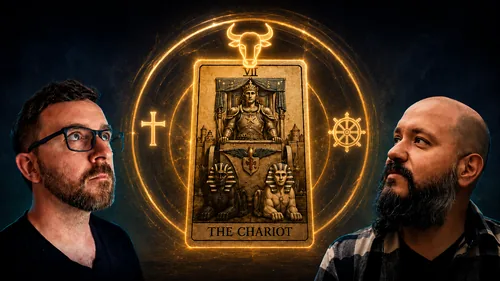
Mario Garza | Symbolic Studies & Kabbalah: The Tree of Life, The Sefirot, and Qliphothic Roots
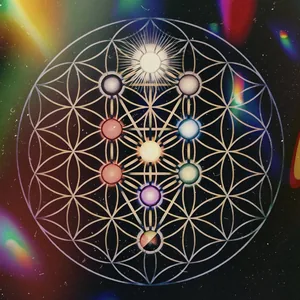









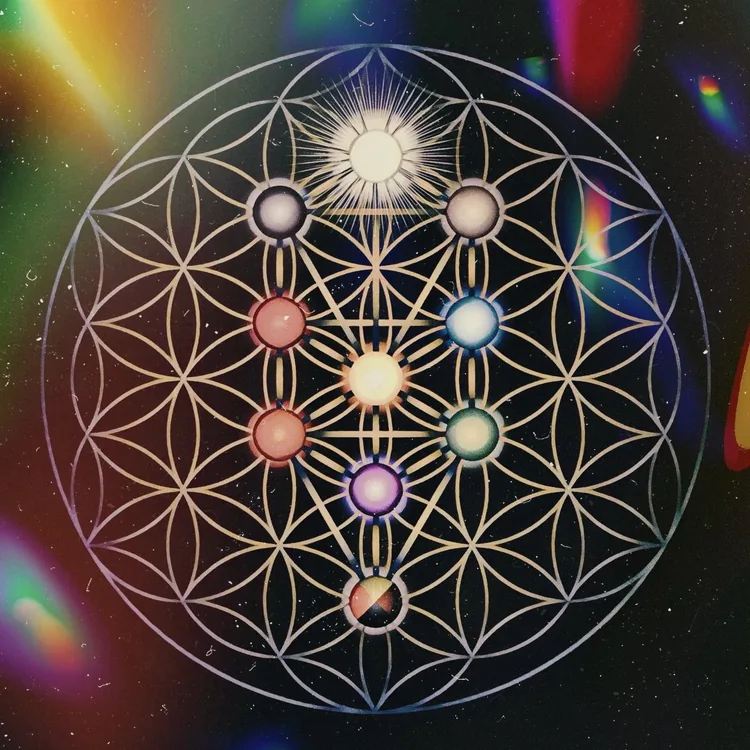
Mario Garza of Symbolic Studies returns to InnerVerse for a deep dive into the componentry of the system of Kabbalah. What is the tree of life, and what are its Sefirot? Does the system have ancient roots, or is it a relatively modern contrivance? And what is the Qliphoth, the inverted tree of death, and how is it used in magical working?
 Plus+Full episode · 3h 8m
 InnerVerse Plus+
Hear the full 3h 8m episode
91 more minutes of this conversation, plus the complete Plus+ archive, premium video and a private podcast feed for your app.
Cancel any time.
Get tuned with Chance
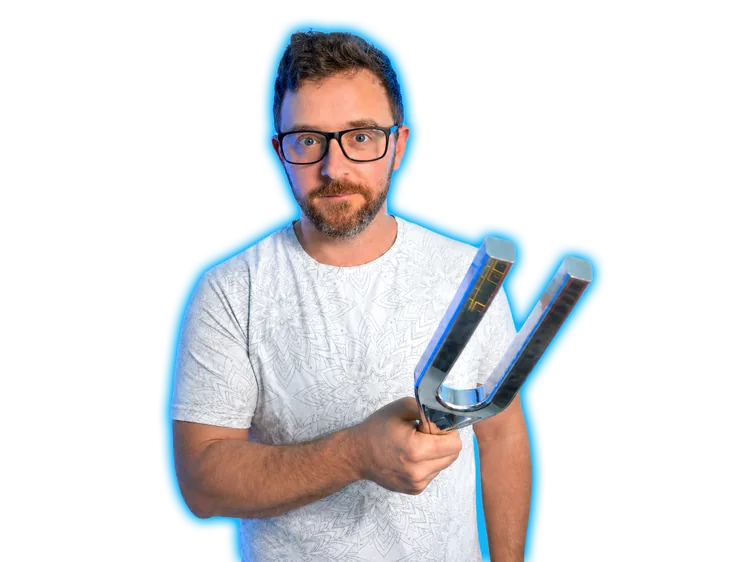
Tuning forks find where energy is stuck in the field around your body and bring it back into flow. Sessions over Zoom, recorded for you to keep.
30 Minute Consultations
Have something to look at, or looking for guidance? We can consult oracular tools, read your chart, or just talk through whatever you choose.
In this episode
Core themes
Receipts before reverence
Chance Garton opens by refusing to treat Kabbalah as a pure divine transmission. He points out that the Sefer Raziel HaMalakh, the Bahir and the Zohar leave no extant trail past the 13th century, and wonders aloud whether the system's emergence is tangled with the fall of the Templars, who employed Jewish clerks and bookkeepers. He then shows two diagrams, the 1516 Portae Lucis with only 17 paths instead of 22, and Athanasius Kircher's 1652 Oedipus Aegyptiacus. A Jesuit publishing Jewish mysticism inside a book on Egypt reads to him as fingerprints of the Therapeutae.
Daath and the tunnels of Set
Mario Garza came back to the Tree of Life because of one point on it, Daath, the hidden sephirah that Kabbalists call crossing the abyss. He read Kenneth Grant's Nightside of Eden at Juan's suggestion and found the whole shadow system, the Qliphothic tree of death, mapped not as paths but as tunnels of Set. Grant frames it as universe A and universe B, with this world birthed from that one, and Mario notes that modern magicians work Lovecraft's old ones as a live pantheon there. Chance adds that Daath is philologically Thoth, the crossroads, Hermes.
Everything points north
Mario's long running thread is the northern sky, and he was struck to find the same claim stated flatly in the Qliphothic material, that Daath is north. In that tradition Ursa Major is a primordial mother bear with seven children, Set is her eighth, and Sirius the dog star is identified with Set as well. He ties this to the central pillar of the tree, which always runs taller than the masculine and feminine pillars beside it, to Polaris as the nail star or sky nail, and to the eye and stairway on Freemasonic tracing boards.
Chance's word weaves
Chance runs philology as evidence for a single old system spread outward. He reads Adam Kadmon through QDM, the Hebrew root for east and sun, which gives Kadmos bringing 17 Phoenician letters to Greece and Kodam as a name of Buddha, and lands on Keter, Kronos, the horn and the crown. Chokmah he treats as cognate to Sophia, and to Arabic Hikmah and Hakeem, a wise man and also a physician, which loops back to the Therapeutae. He derives Eve from the Tetragrammaton, links Gilgul Neshamot to Golgotha and the whirlwind, and notes Eve encodes five, five, five.
What happens when we die
Asked bluntly, Chance says he honestly has no clue, then offers that life is an idea so intense we forget it is an idea, and that death is less a journey than someone snapping their fingers beside us. Mario answers with the circumpunct, a circle with a dot, feminine cosmos holding a masculine point, which he reads as Polaris and the world axis. Both resist escapist ascension. Chance connects the trapped sparks of Isaac Luria's Tikkun Olam to the Buddhist claim that clinging causes suffering, and warns that the real danger in any of it is dogma.
Quotes
“I want to bring an element of skepticism, a grain of salt, not to dismiss the value of these things, but to also not drink the Kool-Aid and look at it as some sort of transcendent deliverance of the pure divine logos.”
“This system is definitely an evolving syncretic or eclectic system, not a perfect transmission of some divinely inspired wisdom from the past, but to be built on, to be refined, to be questioned, to be challenged, which I like.”
“This hidden sephiroth, Daath, the gateway to the root system, the gateway to the shadow system of the tree of life, they heavily correspond with North.”
“Here you can see those two pillars. She is the middle pillar, further emphasizing this divine feminine gateway sort of aspect. And woman is a divine gateway. You know, that's just the fact of the matter. That's how we get here.”
“And so the Jewish system has this idea of Gilgul Neshamot. And Gilgul Neshamot literally translates to cycle or wheel of souls. And this is the same exact, like basically it's their version or their word for transmigration of souls, which is a big component of Buddhism, right?”
“I think life is us having an idea that is so intense that we forget that it's an idea. And whenever we snap out of that idea temporarily for what we call death, we never actually left where we were to begin with.”
“I think that the reality we live in can best be described visually as a circle with a dot inside of it. It's the circumpunct, it's the monad. I think that might be the most accurate map that we have of this whole entire thing.”
“I think when you look at the night sky, I think you're looking at the spirit realm. So I don't think that universe B is this mystical sort of place that you can't understand and fathom and whatever. It's like, just look at the sky.”
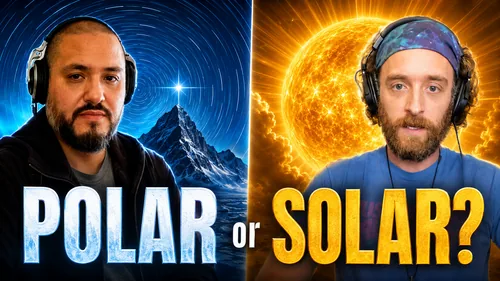
Mario Garza is the artist and researcher behind Symbolic Studies, a project sharing symbolic insights on the zodiac, mythology, folklore and world religions, with astrology as its foundation. A lifelong artist who has worked as an art director and graphic designer for nearly 25 years, he runs Symbolic Studies from the Pacific Northwest alongside his wife Michelle, who co-hosts the podcast with him. His work traces syncretic threads across tarot, occultism and comparative religion, including the argument that the major deities of antiquity were originally polar gods before a solar model was laid over them. He also offers symbolic birth chart and tarot readings, private lessons and freelance design.
See all Mario episodes→Kyle and Serena Denton are community herbalists creating wild-crafted and organic plant medicines out of Milwaukee since 2015. I have used their teas and tinctures on an almost daily basis for years now. Kyle is a great friend of InnerVerse and has appeared on the channel more times than I can count. These products work, not in the allopathic "pharma-medicine" way, but in a terrain-support, consciousness bolstering plant-teacher sort of way.