Rogue Ways | Analyzing The Transhuman Tarot (Part 2): Darketypes & The Final Arcana









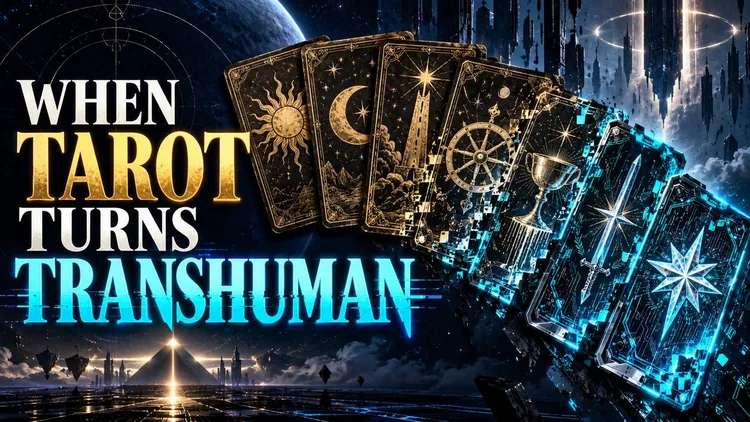
Lindsey Scharmyn of Rogue Ways had me on her show to finish up the analysis of the Transhuman Tarot from Cyberpunk 2077. The latter half of the Major Arcana were definitely as deep as the first, and it's always fascinating to follow that legendary Path of the Fool on another journey, albeit a dark one this time around.
You'll want to watch the video version of this episode so you can follow along with the slide images we're looking at. The extended version completes the analysis of all the Major Arcana cards.
 Plus+Full episode · 2h 28m
 InnerVerse Plus+
Hear the full 2h 28m episode
79 more minutes of this conversation, plus the complete Plus+ archive, premium video and a private podcast feed for your app.
Cancel any time.
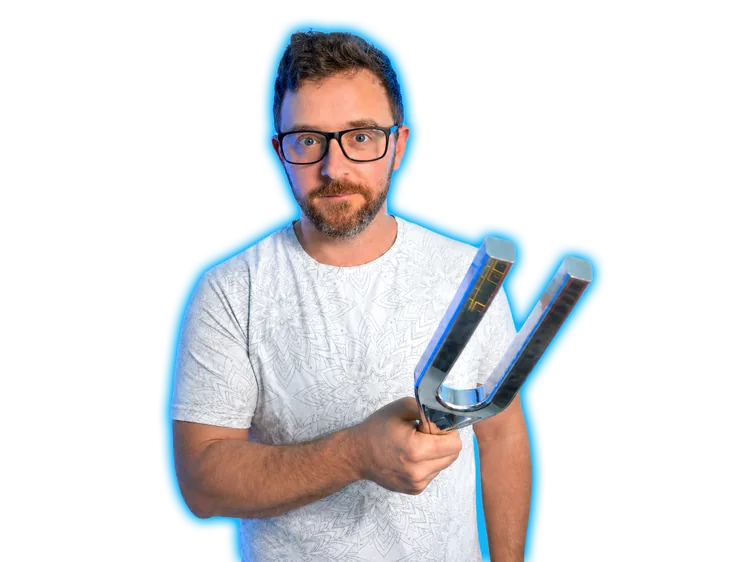
Get tuned with Chance
Tuning forks find where energy is stuck in the field around your body and bring it back into flow. Sessions over Zoom, recorded for you to keep.
30 Minute Consultations
Have something to look at, or looking for guidance? We can consult oracular tools, read your chart, or just talk through whatever you choose.
In this episode
Core themes
Archetypes Flattened to One Dimension
Chance frames the game's card descriptions as archetypes reduced to a single dimension, when anyone who reads tarot knows a card can mean many things depending on context. In his view the artificial future wants circuitry with a predictable pathway. Lindsey reads the cyber Justice figure as judge, jury, and executioner rather than the detached observer the sword is meant to signal, and she notes the towers have lost their sense of tradition. Later Chance names the pattern outright, reduction of humanity and reduction of archetypes, while noting that alchemical reduction carries a gentler meaning.
Transactional Balance Versus Natural Flow
Chance argues that one of the biggest ways society moved into artificiality was by de-spiritualizing number and making everything transactional. He points to indigenous cultures where matching a gift's value is taboo because it cancels the bond, and he contrasts that with a commerce mind trying to extract a little more than equal. Real balance, he says, is a big free flow of energy where nobody keeps score. Lindsey ties this to words as an artificial layer and adds that tipped scales can be a good thing, since imbalance is how energy keeps moving.
The Hanged Man and the Crowd
Lindsey notes that in her own deck the Hanged Man is Odin, a sacrifice made by choice for the sake of others, while the cyber version looks strung up in a web, a dark ritual put upon him. Chance wonders whether the skull-faced figure is the Magician caught with his face off, and reads the corporate suit as the costume of a sacrifice with no meaning. He credits crowd psychology with letting people dodge responsibility by saying the group did it, and contrasts that with Odin and Jesus, who act rightly despite the crowd.
Death, the Machine, and the Sacred Clown
Lindsey observes that the Death card's text sounds balanced while its art is all terror and brutality, with a figure wired into the machine rather than a gentle ferryman. Chance goes further and calls the machine itself death, arguing that whatever we hand to technology is a part of ourselves we eventually kill, and Lindsey agrees that every convenience replaces something we once did for ourselves. Chance also raises the heyoka, a clown-like figure in Native American tribes who breaks taboos to poke at cracks in the ego, as a positive trickster role, while Lindsey insists this Death is brutality for its own sake.
Addiction, Choice, and Self-Existing Nature
Lindsey says that when the Devil appears in a reading she treats it as a temptation that always offers a choice and a chance to purify, while the cyber Devil is pure response with no structure. Chance notes that the original chains hang loose enough to remove, and offers a wordplay of his own, that addiction is a story added over the story of yourself. He then argues the artificial figure will burn out because it cannot reproduce, calls himself an anti-creationist, and says nature is self-existing, a point Lindsey likens to dependent arising in Buddhism.
Quotes
“One of the biggest ways that society has moved into artificiality is to completely de-spiritualize number a hundred percent and make everything transactional.”
“Sometimes the scales are tipped, and that's like a good thing because that's how energy moves.”
“Everything that we give to the machine to have it do for us, that part of ourself we've killed eventually.”
“You're supposed to be transmuting your inner self and your inner world and you're supposed to be crystallizing those aspects of yourself that are the most pure and the most true.”
“I'm seeing a definite theme of the reduction here. Reduction of humanity, reduction of archetypes to one dimension.”
“The devil looks dark and scary, but it's actually offering us all of this growth and this opportunity if we take it that way.”
“You don't have any reckonable beginning. And neither should you assume that there's an ending for you.”
“Life exists. The meaning of life is life. That's where I'm at with it.”
Lindsey Scharmyn is an energy worker and host of the Rogue Ways/Rogue Soul podcast, offering spiritual healing services and psychological insight into psychopathy, malignant personalities, and psychic self-protection.
See all Lindsey episodes→Kyle and Serena Denton are community herbalists creating wild-crafted and organic plant medicines out of Milwaukee since 2015. I have used their teas and tinctures on an almost daily basis for years now. Kyle is a great friend of InnerVerse and has appeared on the channel more times than I can count. These products work, not in the allopathic "pharma-medicine" way, but in a terrain-support, consciousness bolstering plant-teacher sort of way.