MonoMythic Cryptomnesia, Catching Up with Slick Dissident









Tonight's Vibe Rant is shaping up to be a casual hang with the most honorable Slick Dissident, as we catch up on his latest mental frameworks and thought experiments. We'll also be ready to field questions or topics from the audience, and I'll be making some cool announcements about future developments for the InnerVerse channel.
 Plus+InnerVerse Plus+
 InnerVerse Plus+
Hear every full episode
Every extended episode, the complete Plus+ archive, premium video and a private podcast feed for your app.
Cancel any time.
Get tuned with Chance
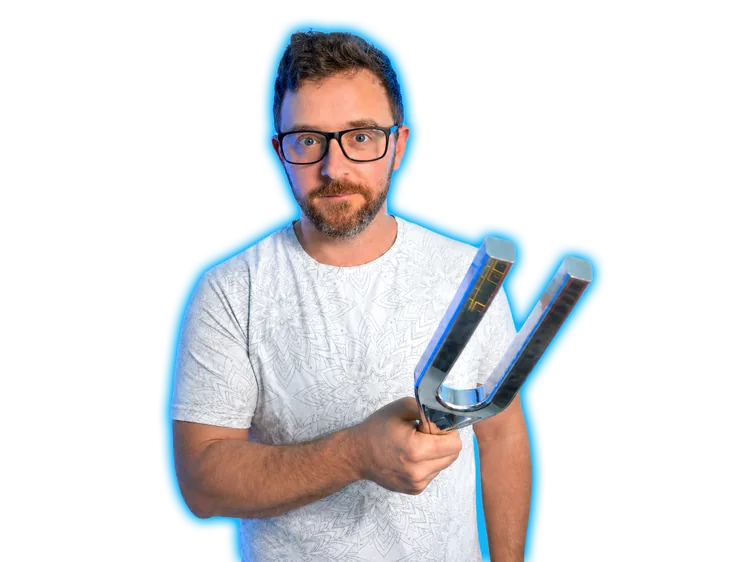
Tuning forks find where energy is stuck in the field around your body and bring it back into flow. Sessions over Zoom, recorded for you to keep.
30 Minute Consultations
Have something to look at, or looking for guidance? We can consult oracular tools, read your chart, or just talk through whatever you choose.
In this episode
Core themes
Cryptomnesia and the Seeded Idea
Gabe, who pulled the word out of Carl Jung's Man and His Symbols, defines cryptomnesia as a forgotten memory returning without being recognized as such, so the person experiences an old thought as a fresh inspiration. He argues the textbook framing, accidental plagiarism, is thin cover for something larger, and ties it to what he calls the Allen Dulles agenda of inoculating childhood with signs and symbols. Chance offers the Dave Chappelle and Owen Benjamin joke dispute as a small case, then widens it: if there is nothing new under the sun, every idea may be cryptomnesia.
Iliad Rage, Odyssey Return
Fresh from a conversation on Jorge Mesa's Third Eye Edify, Gabe maps Homer onto the Enneagram. The very first word of the Iliad is rage, sing Achilles son of Peleus, and the epic runs masculine and outward, while the Odyssey is feminine, a return home going in reverse from the nine all the way back around to the one. Chance answers that the Iliad ends at the midlife crisis and the Odyssey begins there, two halves of one arc, and adds that naming a lunar lander for Odysseus, then watching it tip over and strand itself, was the archetype announced in advance.
Purple, Poverty and the Ink of Power
Reading Plato's Republic, Gabe contends the text is not from the BC era at all but Napoleonic civic design, tuned so the murex purple of the priest class reads as royal and benevolent, and so that poor and pure get conflated until self emptying feels holy. He then points at ink itself, in important, inquiry, inculcate and incorporate, and claims the Constitution was written on goat skin with gall blood and iron shavings, making every reader an inspector of entrails. Chance quotes Frank Herbert's line from Dune Messiah that constitutions become the ultimate tyranny, and notes the Greek for purple later described rotten rashes.
The Eclipse and the Becoming of the Opposite
Gabe notes that Jung uses the eclipse as an image for people losing their reason, and argues eclipse cycles get used to build public dread. Chance calls the eclipse the ultimate symbol of enantiodromia, the becoming of the opposite, and says shadow integration means coming to grips with your own capacity for evil, since it is the people who believe they can do no evil who do the most. They carry that into CERN, where Gabe points at Bernardo Kastrup and suggests the real experiment there is psychological, mapping archetypes, while admitting conspiracy wizards are half confessing their own shadow.
Anagrams, Socrates and the Eschaton
The final hour is Gabe's reveal run: Apollo and Neptune written twice anagram into Napoleon Bonaparte, Zeus and Hera doubled give sorcerer, and the Enneagram's horn avian groups give ophanim, thrones, which he hands to Michael and Gabriel. Chance asks what Socrates says last, then reads the debt to Asclepius against the talismanic language of public health and argues Crito can be read as Christo, while Gabe calls the exit line gallows humor and the seed of the Gnostic prison spell. They close on hecaton and eschaton, Jung's bush soul, Aboriginal dreamtime, and Jung's agathodaemon ring as the artifact Gabe wants back.
Quotes
“So much of what I learn is not exciting that this is how it will always be from this day forward. It's actually more rewarding to realize this is how it has always been.”
“That's the ultimate form of persuasion is making somebody think that it was their idea, there's no higher, and then they take full responsibility for it and your hands are clean.”
“What's beautiful about the Odyssey is it's feminine, it's a return home, and it's going in reverse from the nine all the way back around to the one.”
“You could even consider the Odyssey to be beginning at the midlife crisis. Iliad ends at the midlife crisis, Odyssey begins at the midlife crisis, they're kind of like two halves.”
“I'm not seeing it as this comes from Plato. That's not really what I think I'm looking at, I think I'm looking at Napoleon's handiwork, I think this is Napoleonic civic design.”
“In terms of things predating the Bible, that's not hard to do, because there's no text that can be produced that's older than like the 6th century AD.”
“If the sacred document of the Constitution is sheep skin and bird's blood, then everybody who reads the Constitution is reading entrails of dead animals.”
“It's the people that believe they can do no evil and that they only do good that do the most evil.”
“So often what we do as conspiracy wizards is actually kind of showing a bit of our own shadow. There's like a little self confessional of how black the black pills can be sometimes.”
“Potentially what is part of the cover up of history is so that humanity never quite catches wind of how long this cryptomnesia, like control P, has been operating inside of the collective psyche.”
“These gods are in your DNA, these gods are your freedom of association, and that will set you free.”
“Your mind is the same thing without any borders, boundaries or separations as the entire cosmic universal animating force that is the divine creative intelligence, it's the whole thing.”
Gabriel, known on air as Slick Dissident, co-hosts InnerVerse's Vibe Rant show and is a longtime recurring guest on the podcast. He teaches occult symbolism and tarot on his YouTube channel, ranging across the Major Arcana, the esoteric Enneagram, mythology and archetype, mystic linguistics, and the symbolism hidden in popular film. He is best known for Tarot-tories, his own system mapping the 22 Major Arcana and zodiac archetypes onto the geography of the United States.
See all Gabe episodes→Kyle and Serena Denton are community herbalists creating wild-crafted and organic plant medicines out of Milwaukee since 2015. I have used their teas and tinctures on an almost daily basis for years now. Kyle is a great friend of InnerVerse and has appeared on the channel more times than I can count. These products work, not in the allopathic "pharma-medicine" way, but in a terrain-support, consciousness bolstering plant-teacher sort of way.