Alpha-BetAnalysis, Philological Lock-Picking, & Etymology (w/ Slick Dissident)









Vibe Rant kicks off Taurus season with an attempt to purvey the golden and silver keys of all history's hierophants, by exploring the interactions between ancient alphabets, their similarities, and the errors in transcription that lead to certain letters being interchangeable with others. Chance brings a slideshow of Phoenician, Hebrew, Greek, Etruscan, Celtic and Runic letters, Gabe (Slick Dissident) brings the weaves, and Dylan Saccoccio calls in for the final stretch.
 Plus+InnerVerse Plus+
 InnerVerse Plus+
Hear every full episode
Every extended episode, the complete Plus+ archive, premium video and a private podcast feed for your app.
Cancel any time.
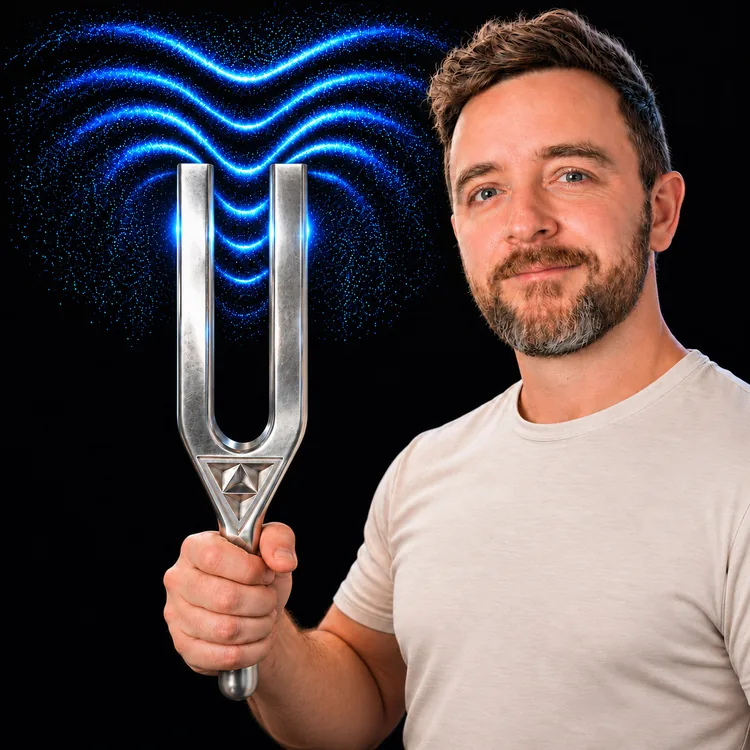
Get tuned with Chance
Tuning forks find where energy is stuck in the field around your body and bring it back into flow. Sessions over Zoom, recorded for you to keep.
30 Minute Consultations
Have something to look at, or looking for guidance? We can consult oracular tools, read your chart, or just talk through whatever you choose.
In this episode
Core themes
A Lock Picking Kit, Not a Court Case
Chance frames the night as a ten thousand foot overview of how letters shift between languages, a set of keys listeners can use to make their own observations. He stresses that any single etymology is not hard evidence of a link between cultures, but that many together start to paint a picture, and he criticizes fast and loose etymology that claims to know what happened millions of years ago. Gabe agrees these connections are not the kind of thing you take to court, yet says they sharpen personal discernment, while Chance separates pulling on a thread for interest from claiming it as truth.
Phoenicia, Cadmus and the Family of Alphabets
Working from a chart in Godfrey Higgins' Celtic Druids, Chance lines up Samaritan, Hebrew, Greek and Celtic Irish letters, then sets the Phoenician alphabet beside Etruscan, Hebrew, Greek and Runic forms to show their resemblance. He notes the X shaped tau as the terminus of several alphabets and asks whether Punic could have been mistranscribed as Runic, since the Greek rho looks like a P. Gabe reads the myth of Cadmus, who brought letters to Greece and married Harmonia, and wonders whether the musical tonality of language was lost when it survived only in writing.
The Master Key of Letter Swaps
Chance's master key slide lays out the core letter swaps: B, P and V, which he illustrates with modern Greek speakers pronouncing beta as V; G, C, K and Q; L and R; M and W; D, T and TH; and every vowel, especially in alphabets like Hebrew that began without vowels. His examples run from vino, bino and pino to gal, Golgotha and the druid kel, a temple of stones, which he argues points to a priestly system older than the Roman Church. He also credits Dylan's Spirit Whirled books with changing how he looks at language.
Silence, Superstition and the Digamma
Gabe offers his theory of the digamma, the lost sixth Greek letter whose name he reads as twice three. He connects it to a Pythagorean habit of never correcting anyone or speaking of negative things in public, citing Socrates waiting until he and Alcibiades are alone to criticize him, and suggests some letters stay silent for the same reason. He links six to sex and F sharp to dissonance. Chance adds a thought experiment, inspired by Jennifer, contrasting the Star of David's easy trines with the cross's squares of hard won value, while calling it high octane speculation.
Diffusion, Forgery and Thinking in Sounds
Dylan Saccoccio calls in to argue that the shared letters point to cultural diffusion with ancient Italy as a home base, while admitting the diffusion could instead be the scope of a forgery created to hide history, and he describes friars' records of the Americas that did not survive. Chance suggests initiates may have built alphabets as ciphers, and passes along a listener's advice to think in sounds rather than letters, noticing what the tongue and lips do with each consonant. He closes by inviting listeners in every culture to pick up the torch and investigate the corners they know.
Quotes
“It's the lie that dies under the weight of the details, not the truth.”
“It's not the kind of thing you can really take to court, because not everybody speaks philologically, you know, they don't see the world through that lens.”
“This show is our best attempt to set you up to do the work for yourself.”
“When we penetrate in and we see it, it can feel like it was nefariously obscured, or it feels like it was covered up or the universe, somebody was working against you. And that's not necessarily the case. It's just that you didn't have the cultural context.”
“So you should pull in those threads and go places, but it's all about what are we claiming as truth versus what are we investigating as interest?”
“In the courtroom, they have a whole other dictionary where the words don't mean what you thought they meant.”
“Has somewhere along the lines the cultural nuance of tonality to the language been lost? Like the language can survive in written form, but is there something hidden in the music, the musical way that you give life to this written system?”
“The author of this existence is hilarious.”
“It is complex, but once you see it, once you get to a certain level, it's all easy after that. It's just the early groundwork when it's unfamiliar to you.”
“I accepted before I started off that this could all, the diffusion we think we're seeing is actually the scope of the forgery created to hide history. That's frightening, but it's gotta be on the table.”
“Think about what your tongue is doing and your lips are doing when you make certain consonant sounds.”
“The only thing to be attached to is the philosophy itself in how you can pertain to what is observably true in nature.”
“All of you out there could potentially be picking up the torch and investigating the corners that you're aware of and bringing it together to help make the case.”
Gabriel, known on air as Slick Dissident, co-hosts InnerVerse's Vibe Rant show and is a longtime recurring guest on the podcast. He teaches occult symbolism and tarot on his YouTube channel, ranging across the Major Arcana, the esoteric Enneagram, mythology and archetype, mystic linguistics, and the symbolism hidden in popular film. He is best known for Tarot-tories, his own system mapping the 22 Major Arcana and zodiac archetypes onto the geography of the United States.
See all Gabe episodes→Kyle and Serena Denton are community herbalists creating wild-crafted and organic plant medicines out of Milwaukee since 2015. I have used their teas and tinctures on an almost daily basis for years now. Kyle is a great friend of InnerVerse and has appeared on the channel more times than I can count. These products work, not in the allopathic "pharma-medicine" way, but in a terrain-support, consciousness bolstering plant-teacher sort of way.
The Sonic Slider is the flagship tool behind Biofield Tuning itself, a weighted tuning fork hand-tuned to 93.96 Hz, the twelfth harmonic of the Schumann Resonance, Earth's own natural electromagnetic pulse. Its extended handle lets you glide it smoothly across the face, neck, and body, and practitioners and users regularly report support for relaxation, circulation, and nervous system regulation. It's the same fork Chance uses in his own sessions, and a great entry point if you want to bring this work into your own daily routine.
If you ever wondered where I gained my symbolic and linguistic chops, it was the Spirit Whirled series of books, by Dylan Saccoccio. If you want to keep up with us on our show Inner Whirled, you'll need to do the same work. These books are a value and treasure greater than a college education in comparative mythology and religious studies ever could be. Give yourself the keys of discernment. Listen to Spirit Whirled.

New to Audible? Activate your free trial and use it to listen to one of my audiobooks. Amazon Prime members get 2 free audiobooks during trial. Use your free trial to try Spirit Whirled.
LotusWei provides amazing and transformative plant essence elixirs, using one of nature's most gentle and beautiful elements: the flowers themselves. Led by founder Katie Hess, LotusWei supports customers with diverse products that operate on homeopathic principles and energetic resonances. I use LotusWei Elixirs to give me an edge with psychic & energetic sensitivity, discernment, and life force coherence. In other words, LotusWei Elixirs help me be a better podcaster and Biofield Tuner. Benefits accumulate over long term use!
Clive de Carle has spent decades researching high-quality natural health essentials, from magnesium and fulvic minerals to iodine, selenium, and vegan-sourced vitamin D. His supplements are formulated with a focus on bioavailability, so the body can actually absorb and use what you're taking rather than letting it pass through unused. It's a simple, no-nonsense approach to filling the nutritional gaps most modern diets leave behind.
Melissa Kupsch is the Australian homeopath behind RMDY Collective and RMDY Academy of Homeopathy, and one of the clearest voices I know for homeopathy as true energy medicine. Her remedies work on the resonance principle, like cures like, where a matching frequency from nature is shown to the body so the vital force can recognize the distortion and resolve it. When Melissa joined Kyle Denton and me on InnerVerse, we explored the premise that spirit precedes form, and homeopathy demonstrates that principle as plainly as anything I know. RMDY makes quality remedies and first aid kits accessible, prepared with real care for who makes the medicine and how.
George Wiseman is the inventor of the AquaCure AC50 and founder of Eagle Research, where he has spent decades developing hydrogen and oxygen (Brown's gas) technology for health and home use. He has appeared on InnerVerse multiple times to talk about hydrogen as a macronutrient and EZ water.