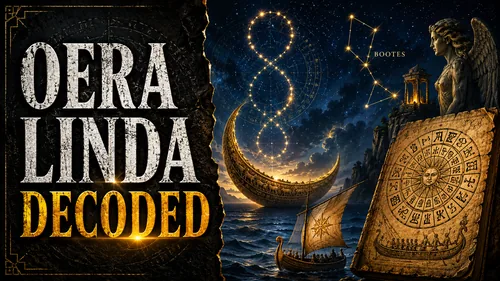
Dylan Saccoccio | Serious Questions About Money, Wealth, Currency & Crypto









Dylan Saccoccio returns to shed light on the shifting world of currency. In this discussion we get to the root of what money is, why it is used, and how belief systems about currency do not match the original intention of money itself. This overview looks at money through history to inform us about what's going on now in the financial world, with a critical look at crypto, gold, fiat, and other types of exchange.
 Plus+InnerVerse Plus+
 InnerVerse Plus+
Hear every full episode
Every extended episode, the complete Plus+ archive, premium video and a private podcast feed for your app.
Cancel any time.
Get tuned with Chance
Tuning forks find where energy is stuck in the field around your body and bring it back into flow. Sessions over Zoom, recorded for you to keep.
30 Minute Consultations
Have something to look at, or looking for guidance? We can consult oracular tools, read your chart, or just talk through whatever you choose.
In this episode
Core themes
What Actually Makes Something Money
Chance reads Webster's 1828 definition of money, which admits that banknotes were only bills of credit, then runs a checklist of fungibility, durability, portability and stability, with Dylan weighing in at each step. Both argue cryptocurrency passes only the fungibility test, because in their view it is conceptual and not physical, while Dylan holds that gold and silver meet every standard and later adds recognition to the list. Chance adds a word magic reading of money as the single eye on the dollar bill. Both stress they are testing definitions and not telling anyone what to own.
Gold, Silver and Counterparty Risk
Dylan argues that gold and silver carry no counterparty risk and do not rely on any other system, which in his opinion makes them money and not assets, and later calls them financial life insurance and not a growth stock like Tesla. The conversation returns to the line that if you do not hold something you do not own it, with MF Global, exchange traded claims and Venezuelan hyperinflation offered as cautionary examples. Chance agrees that metals are useful as a medium of exchange, though he cautions against making everything too black and white.
Crypto, Gambling and Who Holds the Ledger
Dylan argues that the whole economy has become one giant casino, that cryptocurrency is the best option for anyone who wants to gamble, and that digital wealth pulls people away from real skills. Chance argues that no coin is immune from someone holding enough fiat to buy it up, and he speculates that a central bank digital currency may follow a crypto bust. He reads a Microsoft patent about body activity data and floats compliance linked rewards. Both frame much of this as opinion and speculation and say they are not telling anyone what to own.
Debt, Fiat and the Crime of 1873
Chance explains his view that fiat money is invented when someone takes out a loan, so there is never enough money to repay every debt, a game of musical chairs. Dylan tells the story of the crime of 1873 as he understands it, when silver was demonetized, and says the gold standard then led by stages to the petrodollar and to 1971. He claims the dollar has lost over 98 percent of its purchasing power since. His proposed answer is competing currencies, decentralization and freedom, which Chance says makes the most sense.
Commerce, Nature and Taking Responsibility
Dylan defends commerce as the thing that lets people escape pure subsistence, and walks through how a perishable harvest makes stored value useful. Chance contrasts natural value with what he calls virtual unreality, arguing that nature carries no price tag and that language turns source into resource. Both return to personal choice. Dylan says people must feel the consequences of their behavior and that knowing history shows repeating cycles, while Chance closes on charity as serving a living person in front of you, which he distinguishes from distant altruism.
Quotes
“Commerce is actually a good thing because it enables you to secure a lifestyle for yourself so that you're not always in a scarcity based mindset.”
“We're trained to look at language just through the left brain, just through the intellect, just through the given definitions from authority or from society.”
“Everybody looks at gold and silver, like their assets, which they're not, they are money. They satisfy a debt. Everything else is a credit or a derivative of that.”
“Modern commerce is life or nature seen as a game with disposable, exploitable parts instead of a living whole.”
“People need to literally experience the consequences of their behavior. And this problem with this system is it doesn't let them do that.”
“Every loan that comes out, more money in the pot. It's a game of musical chairs. There's never enough money to pay back all the debts.”
“I think it's fun to speculate maybe in private, but in the public forum, it doesn't really do anybody a service.”
“It's just really silly to think that this is the time in history where we're going to create this alternate currency system. We're going to get away from the centralized powers.”
“The solution is going to be competing currencies and decentralization and freedom. People can buy and sell whatever they want, but they don't want to allow that because then they can't tax it.”
“Relying on nature, nature doesn't have mistakes in its code because it's not a code. It's reality, it's being.”
“Knowing history is so important, because when you know history, you can see how these cycles and patterns repeat themselves.”
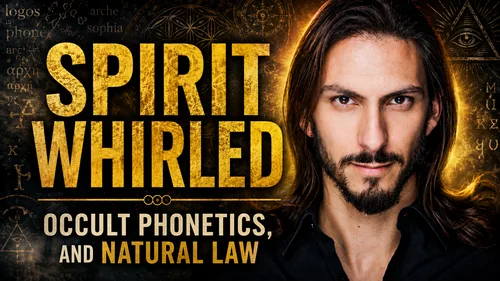
Dylan Saccoccio is the author of the Spirit Whirled series, The Real Universal Empire, and the Tale of Onora. After chasing language back as far as possible, he now explores other avenues to prove cultural diffusion of the ancient universal empire of priests, navigators, masons, and merchants. Find his latest of many hundreds of articles on Substack.
See all Dylan episodes→Kyle and Serena Denton are community herbalists creating wild-crafted and organic plant medicines out of Milwaukee since 2015. I have used their teas and tinctures on an almost daily basis for years now. Kyle is a great friend of InnerVerse and has appeared on the channel more times than I can count. These products work, not in the allopathic "pharma-medicine" way, but in a terrain-support, consciousness bolstering plant-teacher sort of way.