Journey Into Mystery, Purgatory & the Wheel: Loki S1 Ep5 | Marvelous DeMystifiers Ep. 20









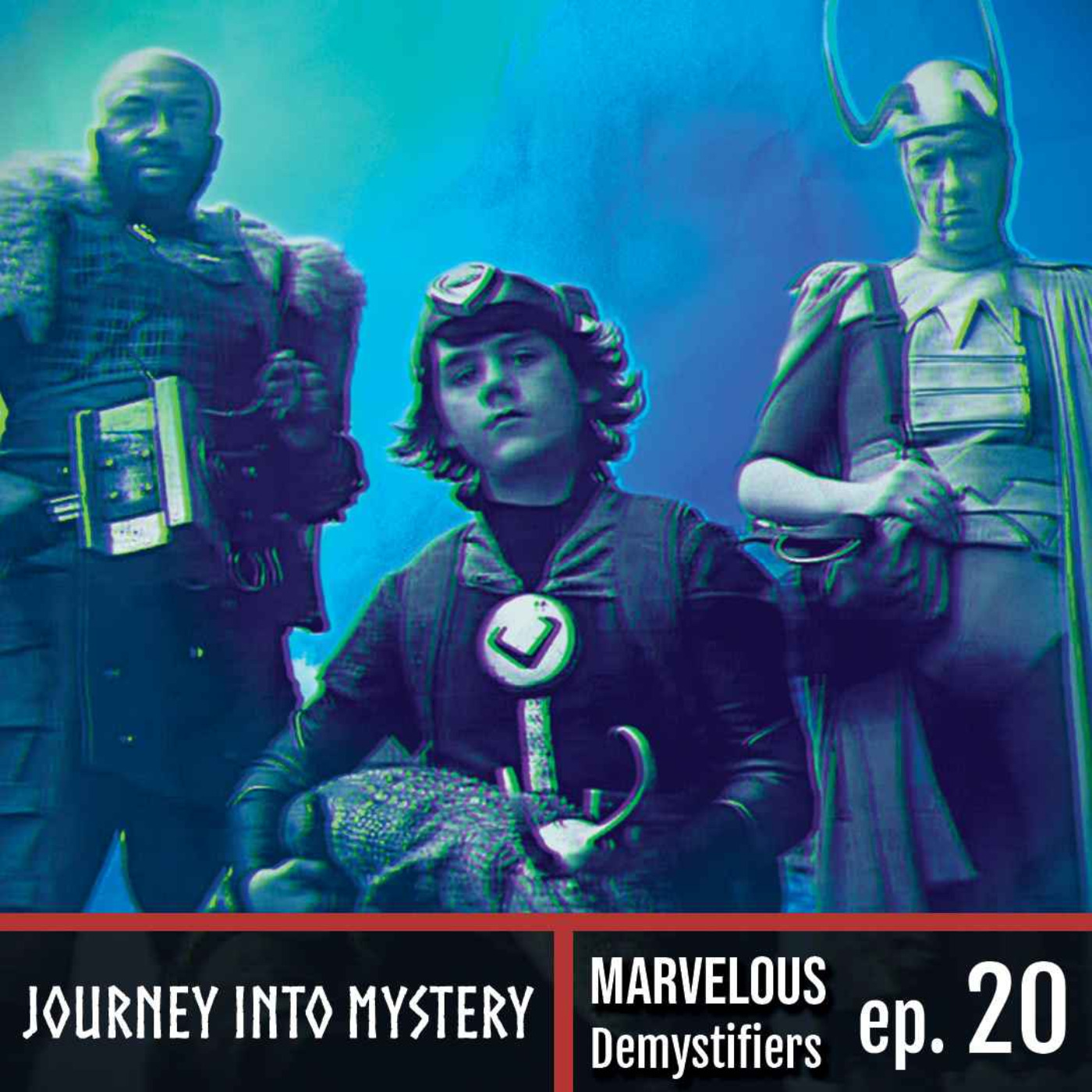
The fifth installment of our Loki series might be the most jam packed yet. Themes of purgatory, penance, the Wheel of Fortune, and the Void all revolve around this episode, along with more clues to the artificial history timeline. There's even a homunculus in this one! Tune in to find out what the many alternate Lokis and the giant smoke monster at the end of time represent in occultism.
 Plus+InnerVerse Plus+
 InnerVerse Plus+
Hear every full episode
Every extended episode, the complete Plus+ archive, premium video and a private podcast feed for your app.
Cancel any time.
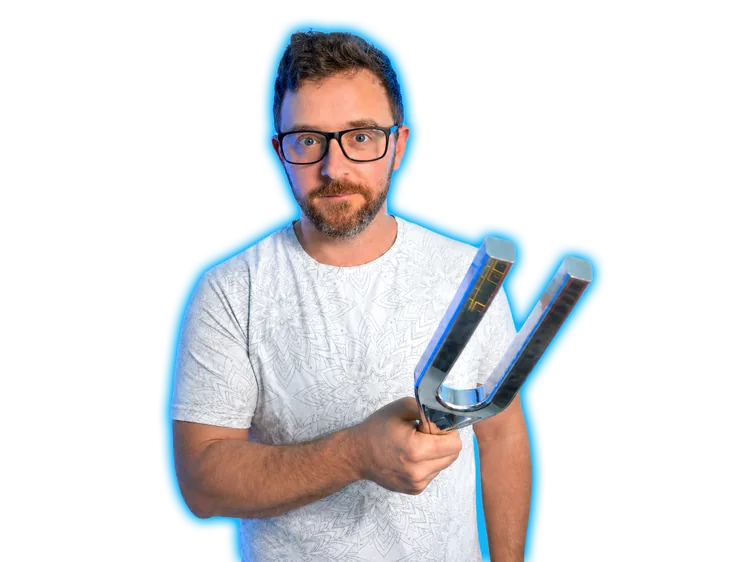
Get tuned with Chance
Tuning forks find where energy is stuck in the field around your body and bring it back into flow. Sessions over Zoom, recorded for you to keep.
30 Minute Consultations
Have something to look at, or looking for guidance? We can consult oracular tools, read your chart, or just talk through whatever you choose.
In this episode
Core themes
The Fortune Card and the Turning Wheel
Chance said the Fortune card, the Wheel of Fortune in the Crowley deck, was the main card for the episode, and he noted that the camera turned a full 360 degrees right after the opening screen. He tied the Hebrew letter kaf, meaning palm or grasp, to the many hands, raised palms and the Sylvie grasping the smoke monster, using words from a gematria PDF a viewer shared. The hosts assigned Sphinx, Typhon and Hermanubis roles on the card to Sylvie, the smoke monster and the Lokis, and Gabe agreed the wheel recurred throughout.
Towers, Lighthouses and the Void
Chance followed the sight of the Lighthouse of Alexandria into a tangent on towers, stupas and the Greco-Buddhist world, and said the fog of time concealed earlier civilizations in the show. He read the void through letter swaps, arguing that vacus became Bacchus, and described purgatory as a place of temporary punishment. One of the hosts read Mobius as the chariot and tower and suggested that Loki mixed the Moon and Hanged Man cards. The hosts linked the smoke monster Alioth to Typhon and to a star in Ursa Major.
Sobek, Epithets and One Underlying Figure
Chance restated his theory that the ancient world's crowd of gods grew from titles and epithets mistaken for separate beings, and used Sobek as his example, saying Sobek, Horus and Osiris overlapped. He read the crocodile Loki as a sovereign and Jesus-like figure and read the void turkeys as peacocks tied to death and rebirth. Gabe added that Sobek sat under the boot on the Thoth Fool card, which he called the subconscious, and linked the peacocks to the Pavo constellation.
The Symposium Scene and the Official Timeline
Gabe argued that the bunker scene mirrored Plato's Symposium, with each Loki taking a turn speaking and the main Loki giving a eulogy about love that invoked Sophia, while the group laughed him down. He later described Dylan's chat point and his own work on the speakers and muses. One of the hosts said the Polybius arcade box also pointed to the historian Polybius, whom he called the father of the sacred timeline, and the hosts compared the game legend with the official story.
Ascending Through the Parts of Yourself
Chance closed by saying the episode introduced the show's largest theme, ascending to godhood by perfecting every part of yourself, and he compared purgatory and penance to resolving old patterns. The hosts read Ophiuchus as a gate out of the zodiac animals, and Chance traced the snakes versus wolves line to the Ophites. Gabe's closing remarks read the cleared smoke as the end of the air season and the move into an earth element, with the group crossing a symbolic solstice as the episode ended.
Quotes
“Gabe, we were just saying before we kicked off here how this episode, the fifth episode, really got our gears turning. I don't think that can be exaggerated enough. It's so full. It's the most full one yet, I think.”
“You know, that's basically what this is saying is prepare yourselves for a treasure hunt, because that really is, I mean, the amount of Easter eggs and symbolic richness that we're about to get into is very apropos that they would hint to us that yeah, we should get our symbolic metal detectors fired up.”
“Okay, so the very first thing you see when the episode begins is one of the TVA's screens where they're monitoring the different timelines and the branches that they need to deal with. And on the screen is flashing Oak Island, Nova Scotia, 1901.”
“And then the Latin word for empty or void is vacus. Anybody know what happens when you do the V to B switch with vacus? It's Bacchus. So even just wrapped up in the idea of void, we're finding our God and our savior.”
“Sobek on shoes. In the Fool card of the Thoth deck, Sobek is on the boot of the Fool card. He's under the boot. This is Sobek conscious. It's the Sobek conscious. Sobek on the shoes is the subconscious on the Fool card. That's what the pictomystery of it was all along.”
“It's my theory that the multitude of gods and goddesses that we are presented from the ancient world, and made to look at the pagan system as, oh, look how crazy they were, they believed in a bazillion gods. I think that to a large degree, we really only had like the Trinity and then that resolving into one.”
“I thought to myself, what could the symbolism of the bowling alley be? There's actually quite a lot there. But first of all, what is purgatory? How do you get out of purgatory? Penance. You gotta be penitent.”
“So one of the things about bowling is the tetractys is the shape that the bowling pins are arranged in. It is four rows, tetra, like four. Four is Hermes' number, AKA Loki. In the tetractys, the first four numbers symbolize the musica universalis, the universal music, music of the spheres.”
“And then our Loki, the main Loki, he stands up and he gives the best eulogy about love. He is Socrates in that moment because he invokes the spirit of Sophia. He calls forward this higher wisdom, this ideal realm, this beatific potentiality that is accessible only through the process of the initiate.”
“Jason is July, August, September, October, November, Jason. Wouldn't it be cool, Chance, if that is actually encoding the ideal season for transportation? If there's actually like the time of year to catch the current to go from east to west, from one place to another, on a great voyage.”
“It's this episode where we start to see the largest theme of the show, which is the idea of ascending to godhood by making all parts of yourself perfect. And in season two, when we get there, we really start to understand that, because parts of self becomes your past, reliving past moments.”
“I guess this is why I'm getting that feel, because of the smoke, because there was so much smoke in this episode. And so the fall is represented by the air elements. And so the smoke is cleared now. Because the smoke is cleared, we're out of the wind elements. We're out of the swords. We're out of the fall time of year.”
“So we're literally going out of the fall and into the winter. And that's the terminus point. So we're literally walking across the solstice with the closure of this episode.”
Gabriel, known on air as Slick Dissident, co-hosts InnerVerse's Vibe Rant show and is a longtime recurring guest on the podcast. He teaches occult symbolism and tarot on his YouTube channel, ranging across the Major Arcana, the esoteric Enneagram, mythology and archetype, mystic linguistics, and the symbolism hidden in popular film. He is best known for Tarot-tories, his own system mapping the 22 Major Arcana and zodiac archetypes onto the geography of the United States.
See all Gabe episodes→Kyle and Serena Denton are community herbalists creating wild-crafted and organic plant medicines out of Milwaukee since 2015. I have used their teas and tinctures on an almost daily basis for years now. Kyle is a great friend of InnerVerse and has appeared on the channel more times than I can count. These products work, not in the allopathic "pharma-medicine" way, but in a terrain-support, consciousness bolstering plant-teacher sort of way.