Ma Rhea Hera and the Ferris Wheel, in 1893 (Loki S2 E3) Part 2 | Marvelous DeMystifiers 28









The highly anticipated return of the Marvelous DeMystifiers brings us to the second part of our analysis of Loki, Season 2, Episode 3. In "1893" we find the Chicago World's Fair setting densely packed with the symbolic fingerprints of the ancient wisdom and mystery traditions. The Major Arcana lens reveals many more gematria clues for the Sun and the Star cards, the role of the Queen of Heaven and her creator-god consort Kronos, and of course, we must discuss that crazy Ferris Wheel. Tune in for an educational experience, regardless of your familiarity with the television series, Loki.
 Plus+InnerVerse Plus+
 InnerVerse Plus+
Hear every full episode
Every extended episode, the complete Plus+ archive, premium video and a private podcast feed for your app.
Cancel any time.
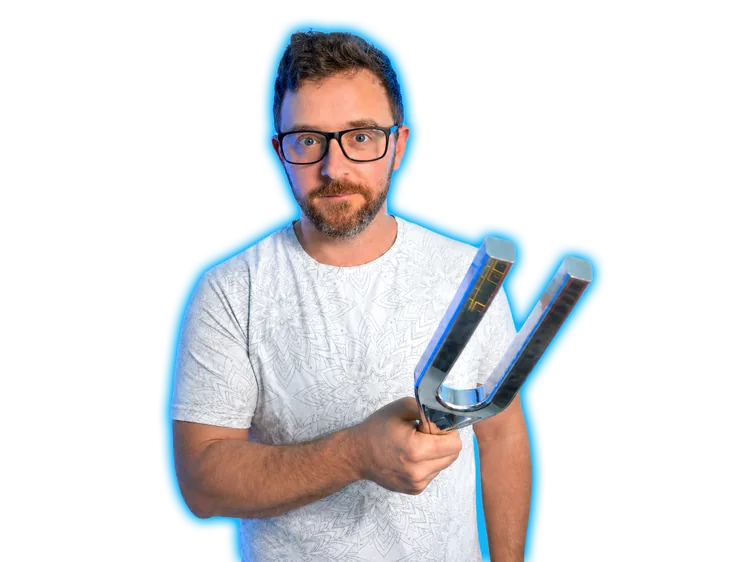
Get tuned with Chance
Tuning forks find where energy is stuck in the field around your body and bring it back into flow. Sessions over Zoom, recorded for you to keep.
30 Minute Consultations
Have something to look at, or looking for guidance? We can consult oracular tools, read your chart, or just talk through whatever you choose.
In this episode
Core themes
Gematria and Cronos as the Sun
Chance Garton opened by recapping the numbers he tracked through the episode: 200 for resh, 510 for resh spelled out and for Cronos in Greek, 216, 205 and 600. He said this showed the system proving itself across languages, and that Cronos was anciently the Sun before the name moved to Saturn. He described Victor Timely as a victim and scapegoat figure and as Adam Kadmon, the prototype man, and tied the Hebrew word for prototype to the 168 hours of a week. Chance presented all of this as his reading.
Renslayer, Hera and the Freezing Chair
Chance Garton read Renslayer as a queen of heaven figure, either Hera or Rhea, and Victor Timely as Hephaestus, who in the myth built Hera a golden throne that trapped her. He pointed to the refrigerator chair and the role reversal when Victor rejected her. Chance called Miss Minutes the Holy Ghost and noted that paracletos and the Latin anima share the value 81. He also broke down Ravonna's first name as a guide to the year, adding up to 314. Gabe tied Renslayer to his Star card dancer.
Hats, Hugo and Hidden Threads
Gabe said a knocked off hat was worse than a punch because its symbolism came with plausible deniability, and Chance noted the tipping of hats during the bidding scene while Gabe raised the insider trading language of bids and puts. When a vendor was called Hugo, Chance connected it to the 608 phoenix cycle and the palm tree, and Gabe offered Hugo de Groot as a possible hidden figure behind contract and international law. Gabe brought up the novel A Dweller on Two Planets as a seed of science fiction, Chance raised Frank Herbert's Dune, and Chance weighed internal monologue against wholeness.
Ixion's Wheel, Dagon and Overstanding
Chance Garton retold the myth of Ixion bound to a burning wheel and compared it to Sylvie pinning Victor to the wall on the Ferris wheel. Gabe mapped the scene onto constellations, including Centaurus, Lupus and Halley's comet. Gabe also described a new stance he called overstanding, saying that superstition protected a person from claiming to understand. Later he proposed that the name Dagon was an anagram of understand. Chance could not make the letters work, and Gabe settled on agon as close enough, while Chance linked Dagon to the Phoenician grain god and to Cronos.
Innocence, Order and the Closing Cards
Chance Garton said the word cosmos meant order and adornment, and that Sylvie's arrival as chaos revealed Victor's innocence. He tied that to the 216 and to hexagram 25 of the I Ching, noting that the two settings of the episode were 25 years apart. Gabe described the Star card dancer landing beside the Fortune card at the story's end, the apple of discord and the Paris Olympics, and Terpsichore holding a samba triangle. Gabe closed with his idea that numbers are alive, which he said made him want to turn and run the other way.
Quotes
“It is my opinion, I think that the system proves itself, that Cronos is actually anciently the Sun, before it was applied as a name to the planet that we call Saturn. So the gematria is where the system proves itself, and this episode gave me a good opportunity to show some of how that works.”
“It literally is like, I remove your head but nothing really happened. This is just theatrics, and so the plausible deniability of theatrics is the pinnacle of subversiveness.”
“The new sovereignty is superstition, and if you can remain superstitious, you'll never get drawn into the liability of saying yes, I understand, because as soon as you say you understand, you know you're lying.”
“If you really get into the minds of the ancients, it's perfectly reasonable to think the Sun is god or that the Sun is the representation of god, in fact it's the most reasonable thing imaginable. There would be no lights, there would be no warmth, it's over. Of course, it's the creator.”
“Halley's comet takes a second to stir its finger in the cocktail cup of the Crater constellation right here, and I just love that Halley's comet is like god stirring the suicide cup of hemlock that Socrates is about to drink. He's like, let me warm that up for you, buddy.”
“I mean, this is the example of what I mean when I say it's almost as if these episodes are written off of the gematria code, because they just contain all of the different facets of the meaning of the numbers that go with the episode. It's so weird.”
“Gematria can prove this, the fingerprints of the system that existed between cultures and across time, that the word in Greek in the New Testament, paracletos, the 81 of that is the same as Latin anima, which is the spirit or the breath of god or the soul. So 81 in one language, 81 in another language, different words, same concept, proving the system.”
“We're always on that coin toss of like, did humans create this incredible system, or is it a product of the spirit coming through us? Kind of like to think the latter, but I also like to think humans did it, because I like to imagine that humans have that potential for creative genius and, you know, multi-leveled thinking, so let's just say both for now.”
“I think that this Frank Herbert is preserving another treasure, that could be a language that has true purchase to causality, built into the very fundamentals of every sentence. And I think the English language is watered down. We don't have the causality we thought we had, and you need years and years and years of training in captured terms of art.”
“In the I Ching, hexagram 25 is innocence, but it also can mean sacrifice. Depending on who's translating from Chinese, it can mean innocence or sacrifice, which is kind of crazy.”
“That's the same as the 205 of Aries in Hebrew, which is resh plus hey, if you just drop the zero you get 25, innocence in the I Ching. The Sun in Aries, the innocent part of the year, the pure lamb of god, the newborn baby, all of that.”
“Why is the dancing muse in the winter time? What I came up with is that we're all dancers in the winter because we're sliding on ice, and when you slip and slide on ice you need impeccable balance.”
“The muses may be the enneagram or the ennead, but there's some of the most far out philosophers of modern time now dabbling with the concept that numbers are alive. Numbers are alive, and that is really nuts. Whatever that is is something to make me turn and run the other way.”
Gabriel, known on air as Slick Dissident, co-hosts InnerVerse's Vibe Rant show and is a longtime recurring guest on the podcast. He teaches occult symbolism and tarot on his YouTube channel, ranging across the Major Arcana, the esoteric Enneagram, mythology and archetype, mystic linguistics, and the symbolism hidden in popular film. He is best known for Tarot-tories, his own system mapping the 22 Major Arcana and zodiac archetypes onto the geography of the United States.
See all Gabe episodes→Kyle and Serena Denton are community herbalists creating wild-crafted and organic plant medicines out of Milwaukee since 2015. I have used their teas and tinctures on an almost daily basis for years now. Kyle is a great friend of InnerVerse and has appeared on the channel more times than I can count. These products work, not in the allopathic "pharma-medicine" way, but in a terrain-support, consciousness bolstering plant-teacher sort of way.