Robert Falconer: Spirit Possession in Therapy, Internal Family Systems and the Others Within Us
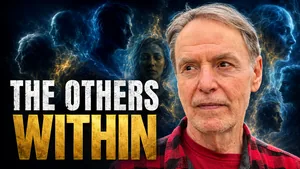









Robert Falconer is a senior teacher in Internal Family Systems (IFS), one of the most influential modern psychotherapy modalities, and the author of The Others Within Us, a clinical exploration of the psyche as a system of parts, and what happens when something inside the mind isn't actually part of the person at all.
In this conversation: how IFS understands the mind as a multiplicity of parts rather than a single self, the difference between managers, firefighters, and exiles, the discovery of Self with a capital S and why it's never damaged regardless of trauma, what Richard Schwartz figured out by working with eating disorder patients, the science of legacy burdens and generational trauma (including the famous Diaz wrestler experiment with rats), and what Bob calls unattached burdens, entities that present clinically but don't seem to belong to the person at all.
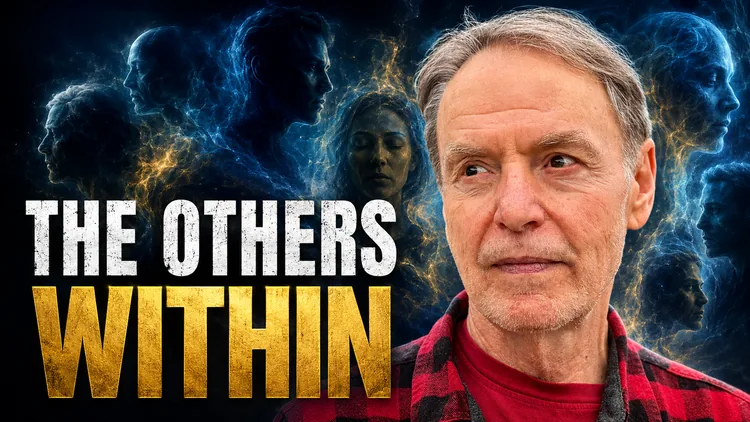 Plus+Full episode · 1h 54m
 InnerVerse Plus+
Hear the full 1h 54m episode
45 more minutes of this conversation, plus the complete Plus+ archive, premium video and a private podcast feed for your app.
Cancel any time.
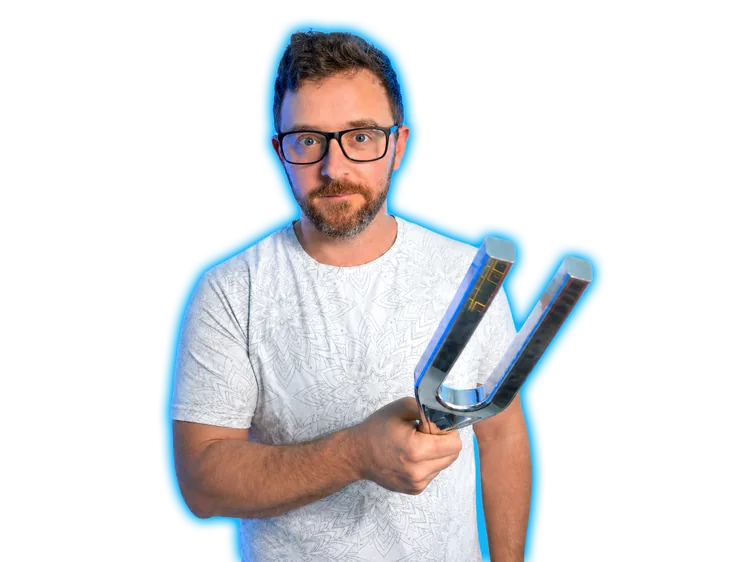
Get tuned with Chance
Tuning forks find where energy is stuck in the field around your body and bring it back into flow. Sessions over Zoom, recorded for you to keep.
30 Minute Consultations
Have something to look at, or looking for guidance? We can consult oracular tools, read your chart, or just talk through whatever you choose.
In this episode
Core themes
Bob Falconer's Road to Parts Work
Falconer opens by saying he came to this work because he desperately needed healing himself, after a childhood he describes as extremely abusive. He worked through most of the therapies on offer and found that the ones that helped were all parts based: Gestalt at the Esalen Institute, the Watkins ego state therapy, voice dialogue, psychosynthesis and Pia Mellody's post induction therapy. About twenty years ago he found Internal Family Systems, which he calls the most potent and the most respectful of them. He also argues the idea is ancient, pointing to a Socratic dialogue where inner debate is treated as obvious proof that a mind is made of parts.
How Richard Schwartz Stumbled Into IFS
Falconer credits Richard Schwartz, whom everyone calls Dick, with discovering rather than inventing IFS about forty years ago. Schwartz was a tenured family therapy professor testing whether reorganizing families would resolve their children's eating disorders, and as Falconer retells it, the children did not realize they had been cured and kept doing the behaviors. So Schwartz started asking what was going on inside them instead. The turning point Falconer describes came when Schwartz tried to team up with one client's other parts to argue a protective part out of its job, watched that backfire badly, and instead began a respectful conversation with the protector.
Protectors, Exiles, Managers and Firefighters
The model Falconer lays out has two basic kinds of parts. Protectors work to stop or prevent emotional pain, and exiles, usually much younger, are the ones carrying it. Protectors divide again into managers, which are proactive and socially acceptable, such as the workaholic, the perfectionist and the inner critic, and firefighters, which arrive once the manager's strategy stops working and which, he says, do not care about collateral damage. Order matters in his account: practitioners go to the protectors first for permission before witnessing and unburdening the exiles. Experience varies, with roughly eighty percent seeing images, Schwartz hearing voices instead, and others reporting Eugene Gendlin's felt sense.
Legacy Burdens and the Startled Rats
Past a person's own history, Falconer says, come legacy burdens, material that is not from the individual's lifetime at all. He points to Rachel Yehuda, who he says has published more than 500 peer reviewed papers on neurochemical changes in the children and grandchildren of Holocaust survivors, and to an experiment run by Dias in Atlanta with a Harvard collaborator named Ressler. Male rats were conditioned with a shock until an almond like smell alone triggered a startle response, their sperm was used to impregnate females that had never met them, and the pups startled at the same smell. Falconer calls the epigenetics behind this hard science.
Unattached Burdens and the Case That Changed Him
Deeper still, Falconer argues, sit what IFS calls unattached burdens, presences he says belong neither to the person nor to their ancestors, and which he is willing to describe using the older cross cultural language of spirit possession. He recounts a training session where a woman's savage inner critic offered none of the good intention a genuine part would, and answered plainly when asked whether it was part of her. Staff nicknamed him Bob the Ghostbuster, and a later email from that woman redirected his career into the decade of research behind The Others Within Us. Chance closes by cautioning listeners against reaching for possession as a first explanation.
Quotes
“Does our mind itself have a similar menagerie of coexistent components merging into and out of the psychic spotlight as needed?”
“We're all multiple personalities. And that's actually good news. It's healthy.”
“Most people go around the planet in a state of internal civil war, burning up most of their energy fighting themselves.”
“The self is already whole, already perfect, already complete. There's nothing to heal. All of your infinite potential remains infinite.”
“The firefighter goes, I'm going to put out that fire. I don't care about collateral damage. I don't care what the hell happens. I'm stopping that emotional pain now.”
“If you treat the parts as though they were full spectrum personalities, you will get much better results in therapy. That's measurable.”
“Occasionally the most effective way to resolve a situation is to look at it as an ego state or a self-part as an independent thing that needs to be communicated with directly.”
“This is pretty much everywhere and it has huge impact. We ought to study it, even if you find it ideologically repulsive.”
Robert Falconer is a senior teacher of Internal Family Systems (IFS) and author of 'The Others Within Us: Internal Family Systems, Porous Mind, and Spirit Possession'; on InnerVerse he discussed IFS's model of the mind as multiple parts and unusual clinical phenomena resembling spirit possession.
See all Robert episodes→Kyle and Serena Denton are community herbalists creating wild-crafted and organic plant medicines out of Milwaukee since 2015. I have used their teas and tinctures on an almost daily basis for years now. Kyle is a great friend of InnerVerse and has appeared on the channel more times than I can count. These products work, not in the allopathic "pharma-medicine" way, but in a terrain-support, consciousness bolstering plant-teacher sort of way.