Making Sense of History & "The Real Universal Empire," Dylan Saccoccio's Latest Book









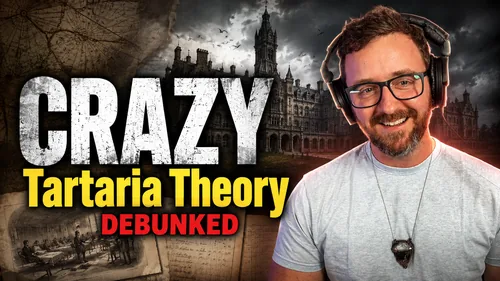
The great Dylan Saccoccio launched his newest book today, The Real Universal Empire, and he's back on Vibe Rant to talk about the research within it! Cutting through the farrago of history and myth, T.R.U.E. explores artifacts, architecture, and language, to bring our understanding closer to reality when it comes to the origins and bones of our global civilization. By rectifying European history and better understanding our ancestors, what can we learn about ourselves?
 Plus+InnerVerse Plus+
 InnerVerse Plus+
Hear every full episode
Every extended episode, the complete Plus+ archive, premium video and a private podcast feed for your app.
Cancel any time.

Get tuned with Chance
Tuning forks find where energy is stuck in the field around your body and bring it back into flow. Sessions over Zoom, recorded for you to keep.
30 Minute Consultations
Have something to look at, or looking for guidance? We can consult oracular tools, read your chart, or just talk through whatever you choose.
In this episode
Core themes
Eleven Books, and a Book With No Prerequisites
Dylan Saccoccio joins Chance Garton on the night his eleventh book, The Real Universal Empire, goes live, work he built in small increments while holding two jobs in one of the most expensive cities in the world. He frames this one as deliberately accessible, something he would love teachers to hand students for summer reading, and Chance notes there is no need to have read the Spirit World series first. The first chapter drops free on his Substack the next morning as a three in one release: narrated audio, searchable digital text, and visuals of the locations and artifacts discussed.
Invisible by Proximity, and the Denial Underneath It
Chance Garton shares how his tuning sessions can surface a pattern a client has carried for years without ever seeing it, which opens a conversation about how things become invisible by their proximity, the way you can always see your nose yet almost never notice it. The idea extends to denial, framed on air as sitting at the root of most mental and physical trouble. Dylan Saccoccio then relays a line from Sammy Gravano, that a spoken word, like a fired bullet or arrow, cannot be called back mid course, and admits he is trying to think more before he speaks.
The Etruscan Argument Against a Greek or Oriental Origin
In the chapter one excerpt played on air, Saccoccio argues that the Etruscan languages are indigenous to Italy, that their alphabets are Pelasgian, which is Phoenician, and that no archaeological evidence supports mass migration into Italy at the turn of the first millennium BC. He contends Urnfield culture spreads south to north inside Italy, that Caesar is an exclusively Etruscan name, and that puni signifies purple in Etruscan. He cites Suetonius, who wrote that aesar meant God in Etruscan, and says his own line runs back through Domenico de Cesare, born in Sicily in 1871.
A Bronze Hand, a Rattlesnake Disc, and Contact Before Columbus
The two examine a newly published 2,100 year old sheet bronze severed hand from the Basque region of Spain. Saccoccio's first read is that the characters look like Etruscan letters upside down, with proto runic forms of the kind that came out of Clusium, and he argues the Basques descend from Etruscans, pointing to aita, the Basque word for father. He then walks Chance to a Carthaginian stele on the Louvre site showing a palm with an eye, sets it beside the Tuscaloosa rattlesnake disc dated to 1300 AD, and calls the pairing either archaeological fraud or contact two centuries before Columbus.
Coined Words, Forged Centuries, and Leaving the Conspiracy Crowd
A passage from Archbishop Richard Trench's On the Study of Words, quoted in the book and read on air, credits Eichhorn with first suggesting the label Semitic because a common name was wanting. Saccoccio argues the Latin Vulgate contains words already archaic by the Common Era, questions dating methods, saying rock formed thirty years ago was dated at millions of years, and locates the real disruption somewhere in the Middle Ages rather than with the Romans themselves. He closes saying he is done courting conspiracy theorists, wants serious readers and even critical guest writers, and measures his work by whether readers stop needing him.
Quotes
“Little steps, little baby steps, just every day do something. Eventually over time it accumulates, and if you have a purpose or if you have an objective, you'll eventually reach it.”
“One of the things I'm enjoying the most about it is the demystification of it all.”
“It's not to show you all this conspiracy stuff to get you upset, it's to give you a broader perspective so you don't take it as serious.”
“Generally speaking, you get the letters after your name for being the best at following directions, following the orders, following the way that things are flowing already in whatever field of academia.”
“You're not supporting me when you buy these books, you're investing in yourself.”
“What you found last year or last month might not be something you can find today if you didn't save it yourself and keep track of what it was.”
“I could be wrong in my interpretation of those facts, but what's not wrong is the facts that are established.”
“The Divine can speak through you a lot more easily when you understand a wider array of language.”
“It's one of not accomplishing what you intended to do, but accomplishing something maybe even greater by just pushing through it and working.”
“I empower the readers to become their own authorities. That's why people aren't going to like me, because you don't need me once you go through my work.”
“Let your life be the example, and then people will come to you and ask questions.”
“I'm not trying to attract conspiracy theorists, I'm trying to attract more well-rounded learned people who are willing to lift the weights and do the work.”
Dylan Saccoccio is the author of the Spirit Whirled series, The Real Universal Empire, and the Tale of Onora. After chasing language back as far as possible, he now explores other avenues to prove cultural diffusion of the ancient universal empire of priests, navigators, masons, and merchants. Find his latest of many hundreds of articles on Substack.
See all Dylan episodes→Kyle and Serena Denton are community herbalists creating wild-crafted and organic plant medicines out of Milwaukee since 2015. I have used their teas and tinctures on an almost daily basis for years now. Kyle is a great friend of InnerVerse and has appeared on the channel more times than I can count. These products work, not in the allopathic "pharma-medicine" way, but in a terrain-support, consciousness bolstering plant-teacher sort of way.